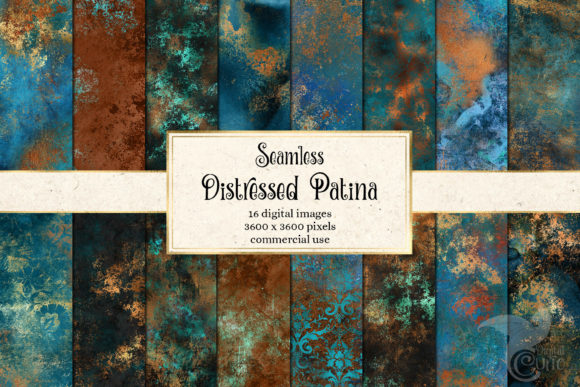
Mastering the Aesthetic of Distressed Patina Textures in Digital Design
The intersection of organic decay and digital precision has created a unique niche in modern visual arts. Among the most sought-after elements in this category are Distressed Patina Textures. These digital assets capture the complex beauty of oxidized metals, specifically copper, translating centuries of natural weathering into high-resolution files ready for immediate application. Unlike flat, synthetic backgrounds, these textures offer depth, history, and a tactile quality that resonates with both seasoned professionals and enthusiastic hobbyists. The specific collection featuring sixteen grunge copper patina textures represents a versatile toolkit for creators looking to infuse their projects with an air of antiquity and sophistication.
The Science and Art of Copper Oxidation
To truly utilize Distressed Patina Textures, one must understand the physical phenomenon they mimic. Patina is a thin layer that forms on the surface of bronze, brass, or copper as a result of age and exposure to the elements. In nature, this process involves chemical reactions where oxygen and moisture interact with the metal, creating a protective coating of verdigris—a mix of green, blue, and brown hues. This natural aging process is irregular, unpredictable, and rich with character.
Digital artists strive to replicate this complexity. The set of 16 seamless files mentioned here does not merely apply a flat green color over a brown base. Instead, it captures the nuances of the oxidation process, including the subtle distressed damask patterns that might have been embossed into the metal before it aged, or the shimmering handwriting that suggests a historical artifact. By studying these variations, designers can move beyond simple overlays and create compositions that feel grounded in reality. The interplay of light and shadow within the texture, rendered at 300 dpi, ensures that the digital representation holds up under close inspection, whether viewed on a large monitor or printed on high-quality paper.
Anatomy of a High-Resolution Texture Set
The technical specifications of a digital asset often dictate its usability across different mediums. For a professional workflow, resolution and dimensions are critical. This particular collection offers images measuring 12 x 12 inches (30.5 x 30.5 cm) with a pixel dimension of 3600 x 3600 pixels. This size is significant because it aligns perfectly with standard scrapbooking and card-making formats while providing ample room for cropping and manipulation without losing clarity.
The 300 dpi (dots per inch) resolution is the industry standard for print media. It ensures that when a designer prints a digital art piece, the edges remain sharp, and the intricate details of the grunge effects do not appear pixelated. Furthermore, the seamless format of these files is a crucial feature for scalability. A seamless texture allows the image to tile infinitely without visible breaks or repeating patterns. This capability transforms a single 12x12 file into a potential wallpaper for a massive web background or a wrapping pattern for a large-scale canvas print. The ability to stretch these Distressed Patina Textures across vast areas while maintaining visual continuity is what separates professional-grade assets from amateur downloads.
Practical Applications in Paper Crafts and Decoupage
While digital artists often think first of screen-based design, the utility of these textures extends deeply into the realm of physical crafts. The rise of Print-on-Demand services and home inkjet printers has bridged the gap between digital files and tangible creations. For enthusiasts of decoupage, these copper patina textures serve as an instant foundation for transforming plain objects into vintage treasures.
Imagine taking a simple wooden box or a ceramic vase. By printing the textured paper onto heavy cardstock or specialty decoupage sheets, a crafter can adhere the material to the object's surface. Once sealed with varnish, the result mimics the look of an antique copper vessel that has sat in an attic for decades. The subtle distressed damask patterns included in the set add a layer of elegance, suggesting that the object was once part of a fine dining service or a decorative wall panel. This technique saves hours of manual painting and distressing, allowing crafters to focus on composition and assembly rather than the tedious process of creating the background effect from scratch.
Scrapbooking and Invitation Design
In the world of scrapbooking, storytelling is paramount. Photographs need a backdrop that complements the mood of the memory being preserved. Distressed Patina Textures provide a moody, nostalgic atmosphere that pairs exceptionally well with sepia-toned photos, black-and-white portraits, or even modern images seeking a retro twist. The shimmering handwriting found in some of the files can act as a subtle watermark or a focal point for journaling entries, adding a personal touch that feels handwritten yet consistent.
Similarly, the stationery industry benefits greatly from these assets. Wedding invitations, event programs, and business cards often require a sense of gravitas and tradition. A copper patina background conveys luxury and timelessness. Because the files are high-resolution, they can be sent directly to commercial printers who will produce crisp, vibrant results. The seamless nature of the files also allows for creative border designs where the texture flows continuously around the text, ensuring no awkward cuts or mismatches occur during the trimming process.
Enhancing Digital Art Prints and Web Environments
For digital illustrators and graphic designers, the integration of realistic textures is essential for breaking the "flatness" of vector graphics and solid colors. When creating digital art prints intended for sale or gallery display, the inclusion of Distressed Patina Textures adds a layer of realism that engages the viewer's eye. The human brain is wired to recognize natural imperfections; a perfect, smooth surface often feels artificial, whereas a surface with scratches, oxidation, and uneven coloring feels authentic.
By overlaying these textures onto digital paintings using blending modes such as "Multiply," "Overlay," or "Soft Light," artists can unify disparate elements of a composition. For instance, a fantasy map drawn with clean lines can be instantly aged by applying a copper patina texture, making it appear as if it were discovered in a dungeon. The 3600 x 3600 pixel size provides enough detail for large-format prints, ensuring that the texture remains visible even when blown up to poster size.
In web design, these textures serve a dual purpose: aesthetic appeal and functional hierarchy. A seamless patina background can be used for hero sections of websites dedicated to history, architecture, or artisanal goods. The subtle variation in the texture helps to reduce eye strain compared to stark white backgrounds while still allowing text to remain legible if the contrast is managed correctly. The shimmering elements within the texture can catch the light on a screen, drawing attention to call-to-action buttons or key headlines without the need for aggressive animations.
Workflow Integration for Professionals
Incorporating these assets into a professional workflow requires an understanding of file management and compatibility. Since the files are provided in JPG format, they are universally compatible with almost all design software, including Adobe Photoshop, Illustrator, GIMP, Canva, and various scrapbooking applications. The 300 dpi resolution means they are ready for immediate use in print layouts without the need for upscaling, which often degrades image quality.
Designers should consider the color palette of their project when selecting from the set of 16 textures. While they all share the copper patina theme, the variations range from deep, dark greens to lighter, more oxidized blues and browns. Selecting the right shade can dramatically alter the mood of a piece. Additionally, the seamless format allows for experimentation with tiling. A designer might choose to tile the texture twice to create a larger, more varied background or rotate the tiles to break up any potential repetition, further enhancing the organic feel of the final product.
Trends in Vintage and Grunge Aesthetics
The enduring popularity of vintage aesthetics in contemporary design speaks to a cultural desire for authenticity and connection to the past. In an era dominated by sleek, minimalist interfaces and hyper-realistic 3D renders, the grit and grime of Distressed Patina Textures offer a refreshing counterpoint. This trend is evident across various sectors, from fashion branding to interior design concepts.
Businesses are increasingly adopting these textures to signal heritage and craftsmanship. A brand selling handcrafted leather goods or artisanal spirits might use a copper patina background to suggest that their products are made with traditional methods and stand the test of time. The distressed damask patterns evoke a sense of old-world luxury, appealing to consumers who value quality and history over mass-produced perfection.
Furthermore, the versatility of these textures supports the current trend of mixed-media art. Artists are combining digital files with physical materials, scanning the results, and then re-applying digital textures to create infinite loops of creativity. The set of 16 files acts as a robust library for this kind of experimentation, offering enough variety to keep a project fresh without overwhelming the creator with too many choices. As long as there is an appreciation for the beauty of decay and the passage of time, Distressed Patina Textures will remain a vital tool in the creative arsenal.
Considerations for Implementation
While the benefits are clear, successful implementation requires attention to detail. Color balance is a primary consideration. The strong greens and blues of a copper patina can clash with certain color palettes. Designers should ensure that the foreground elements—text, images, or illustrations—have sufficient contrast against the busy background. Using drop shadows or text boxes with semi-transparent fills can help maintain readability.
Another consideration is the scale of the texture. Because the files are 12x12 inches, using them at full size works well for standard projects. However, for very small items like business cards, the texture might appear too dense. Scaling the texture down slightly or using a low-opacity blend mode can soften the effect, ensuring the texture enhances rather than dominates the design. Conversely, for large banners, the seamless nature allows for expansion, but care must be taken to ensure the lighting direction in the texture matches the lighting in the rest of the composition to maintain visual coherence.
Ultimately, the value of this digital product lies in its ability to bridge the gap between the digital and physical worlds. Whether used to create a stunning invitation, a detailed digital painting, or a unique decoupage project, these textures provide a foundation of quality and character. They empower creators to produce work that feels lived-in, historic, and undeniably real, proving that even in the digital age, the beauty of the worn and weathered remains timeless.